PhaseLink develops and reviews protection philosophies, protective-device coordination, and relay settings based on system configuration, fault conditions, equipment capability, operating modes, and project requirements. The engineering basis and implementation dependencies are documented so settings can be reviewed, applied, and maintained with clarity.
PhaseLink develops and evaluates protection schemes, settings, and coordination to support selective fault clearing, equipment protection, and reliable electrical-system operation.
Define protection zones, primary and backup functions, operating objectives, coordination priorities, and key assumptions appropriate to the system.
Develop applicable phase, ground, voltage, frequency, directional, differential, and other protection settings supported by the project scope, system data, and device capability.
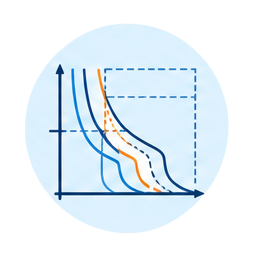
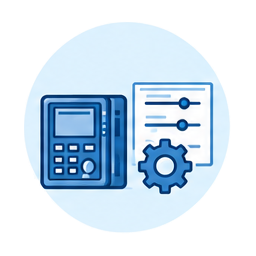
Evaluate coordination among relays, breakers, fuses, reclosers, trip units, and downstream devices to support equipment protection and project selectivity objectives.

Review instrument-transformer ratios, connections, polarity, phase sequence, scaling, and relay inputs relevant to protection and measurement performance.
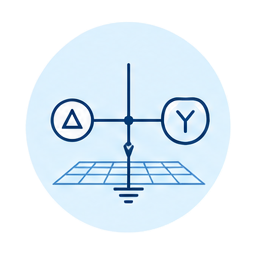
Evaluate grounding configuration and sequence quantities where relevant to ground, directional, differential, or other protection functions.

Review existing settings, available relay event reports, oscillography, sequence-of-events information, and related records to investigate protection performance or operating events where scoped.

Provide settings calculations, setting sheets or files, revision/change documentation, and engineering support for controlled implementation and verification where included.
Protection review is typically needed when systems are added, modified, interconnected, or experiencing changes that affect fault levels, equipment, operating configuration, or protection requirements.
For new switchgear, feeders, transformers, generators, DER, service equipment, or other systems requiring protection settings and coordination.
When existing relays or protective devices are replaced, upgraded, or migrated to new platforms.
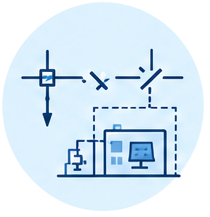
When expansion, reconfiguration, grounding changes, new generation, or changing fault levels may affect existing protection.
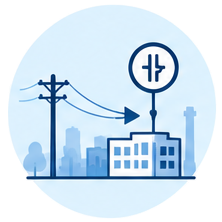
When utility requirements introduce or modify protection, control, metering, or coordination requirements.
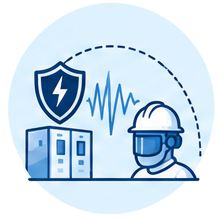
When coordination or arc-flash studies identify settings changes or protection modifications requiring engineering review.
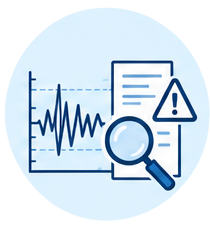
When nuisance trips, unexpected operations, slow clearing, coordination conflicts, questionable settings, or available event records require investigation.
Typical inputs include one-lines, protective-device and relay data, CT and PT information, equipment ratings, utility protection requirements, fault data, existing settings, and operating configurations.
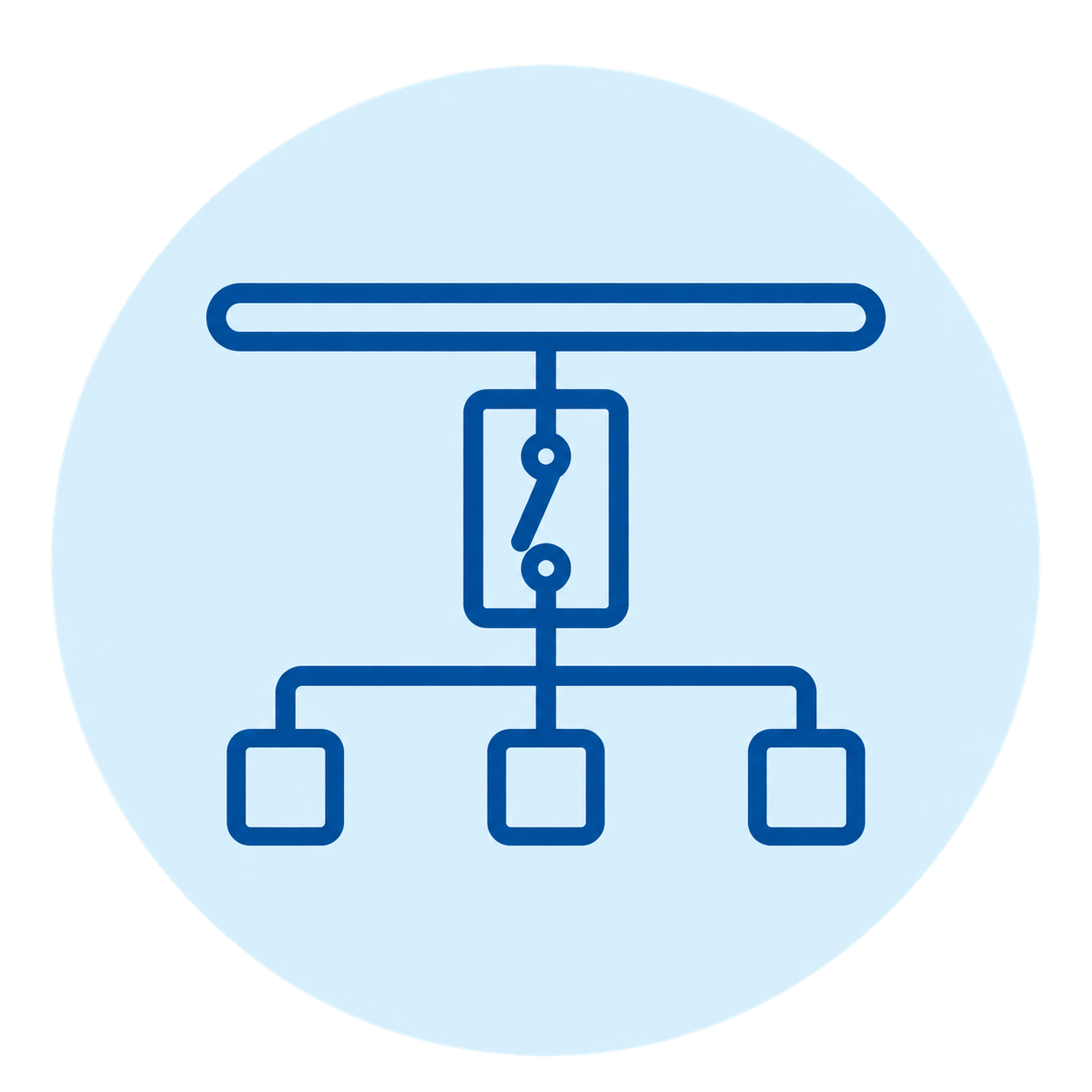
Current one-line, protection zones, normal and alternate operating configurations, and relevant system changes.
Available fault study/model, utility source information, and applicable operating scenarios.

Equipment ratings, transformer data, grounding configuration, equipment withstand information, and relevant characteristic curves.
Relay/device manufacturer and model, firmware, existing settings files, trip-unit information, and applicable manuals.
Instrument-transformer ratios, connections, polarity, wiring diagrams, and measurement configuration.
Current settings, coordination plots, prior calculations, protection philosophy, and available settings records.
Relevant relay event reports, oscillography, sequence-of-events records, trip history, and known operating issues where applicable.

Owner, utility, manufacturer, and project-specific protection or operational criteria.
Deliverables may include protection philosophies, relay settings, coordination evaluations, settings documentation, technical findings, and recommendations for identified protection issues.
Protection philosophy · Protection zones · Primary/backup relationships · Design assumptions and criteria, where included
Relay setting calculations · Setting sheets · Native settings files or agreed exports, where included
Time-current curves · Device coordination · Equipment protection evaluation · Sensitivity and operating-condition considerations
CT/PT application information · Measurement configuration · Relevant relay input, scaling, grounding, or sequence notes
Settings comparison/change record · Revision identification · Implementation or verification checklist · As-left settings record support, where included
Share the one-line, relay or protective-device information, existing settings, CT/PT data, available fault information, and the issue or system change being evaluated. PhaseLink can help establish the required engineering basis and define the appropriate protection scope.
Incomplete protection records are not a barrier to an initial discussion.
Engineering perspectives on power-system studies, interconnection, protection, and system assessment.
Necessary |
Necessary |
| Necessary cookies are absolutely essential for the website to function properly. These cookies ensure basic functionalities and security features of the website, anonymously. | |
Advertisement |
|
| Advertisement cookies are used to provide visitors with relevant ads and marketing campaigns. These cookies track visitors across websites and collect information to provide customized ads. | |
Analytics |
|
| Analytical cookies are used to understand how visitors interact with the website. These cookies help provide information on metrics the number of visitors, bounce rate, traffic source, etc. | |
Functional |
|
| Functional cookies help to perform certain functionalities like sharing the content of the website on social media platforms, collect feedbacks, and other third-party features. | |
This website uses cookies to improve your experience while you navigate through the website. Out of these, the cookies that are categorized as necessary are stored on your browser as they are essential for the working of basic functionalities of the website. We also use third-party cookies that help us analyze and understand how you use this website. These cookies will be stored in your browser only with your consent. You also have the option to opt-out of these cookies.